


Adminer - Plugins
Adminer and Adminer Editor can be extended by plugins. To use a plugin
- adminer.js (Roy Orbitson): Load
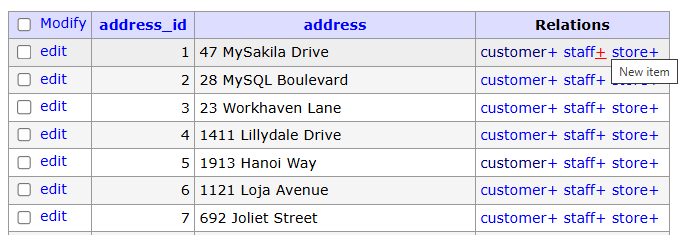
adminer.js - backward-keys: Display links to tables referencing current row, same as in Adminer Editor (screenshot)
- before-unload: Display confirmation before unloading page if a form field was changed
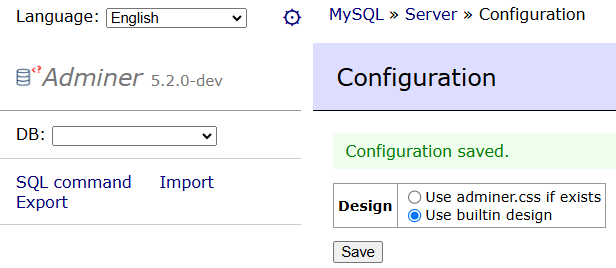
- config: Configure options by end-users and store them to a cookie (screenshot)
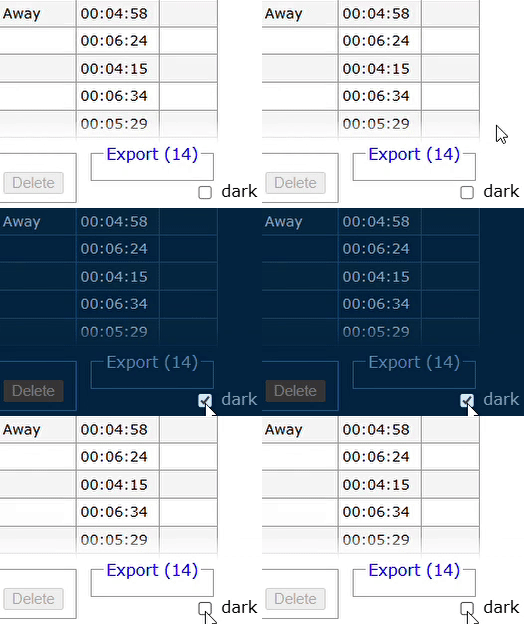
- dark-switcher: Allow switching light and dark mode (screenshot)
- database-hide: Hide some databases from the interface - just to improve design, not a security plugin
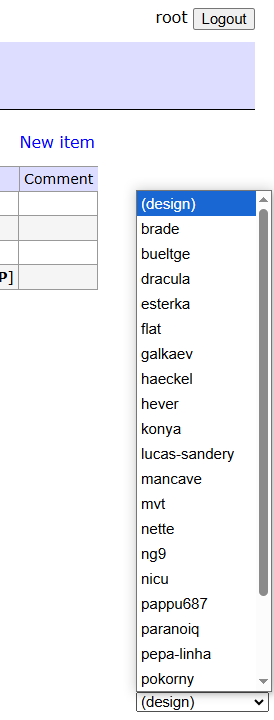
- designs: Allow switching designs (screenshot)
- dump-alter: Exports one database (e.g. development) so that it can be synced with other database (e.g. production) (screencast)
- dump-bz2: Dump to Bzip2 format
- dump-date: Include current date and time in export filename
- dump-json: Dump to JSON format
- dump-php (Martin Zeman): Dump to PHP format
- dump-xml: Dump to XML format in structure
<database name=""><table name=""><column name="">value - dump-zip: Dump to ZIP format
- edit-calendar: Display jQuery UI Timepicker for each date and datetime field
- edit-foreign: Select foreign key in edit form
- edit-textarea: Use
<textarea>forcharandvarchar - editor-setup: Set up driver, server and database to use with Adminer Editor
- editor-views: Display views in Adminer Editor
- email-table: Get e-mail subject and message from database (Adminer Editor)
- enum-option: Use
<select><option>forenumedit instead of<input type="radio"> - file-upload: Edit fields ending with
_pathby<input type="file">and link to the uploaded files from select - foreign-system: Link system tables (in
mysqlandinformation_schemadatabases) by foreign keys - frames: Allow using Adminer inside a frame
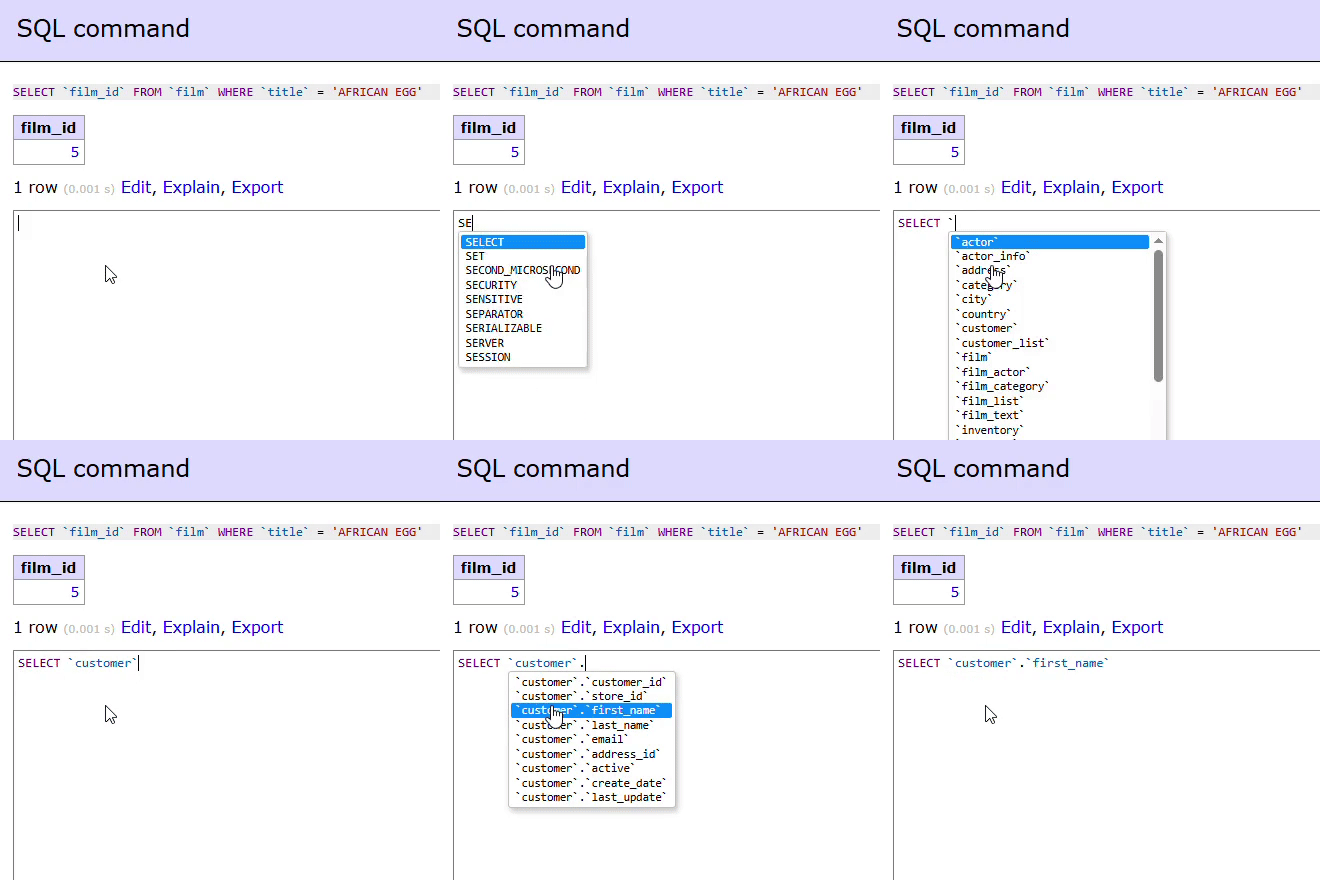
- highlight-codemirror: Use CodeMirror 5 for syntax highlighting and
<textarea>including type-ahead of keywords and tables (screenshot) - highlight-monaco: Use VS Code's Monaco Editor for syntax highlighting and SQL
<textarea> - highlight-prism: Use Prism Code Editor for syntax highlighting and
<textarea> - json-column: Display JSON values as table in edit
- login-ip: Check IP address and allow empty password
- login-otp: Require One Time Password at login (instructions)
- login-password-less: Enable login without password (example)
- login-servers: Display constant list of servers in login form
- login-ssl: Connect to MySQL, PostgreSQL or MS SQL using SSL
- login-table: Authenticate a user from the
logintable - master-slave: Execute writes on master and reads on slave
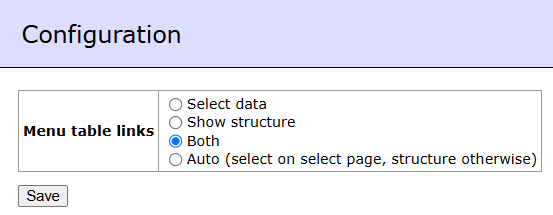
- menu-links: Configure menu table links; combinable with AdminerConfig (screenshot)
- pretty-json-column (Christopher Chen): Pretty print JSON values in edit
- row-numbers: Display row numbers in select
- select-email: Allow sending e-mails to addresses in table
- slugify: Prefill field containing
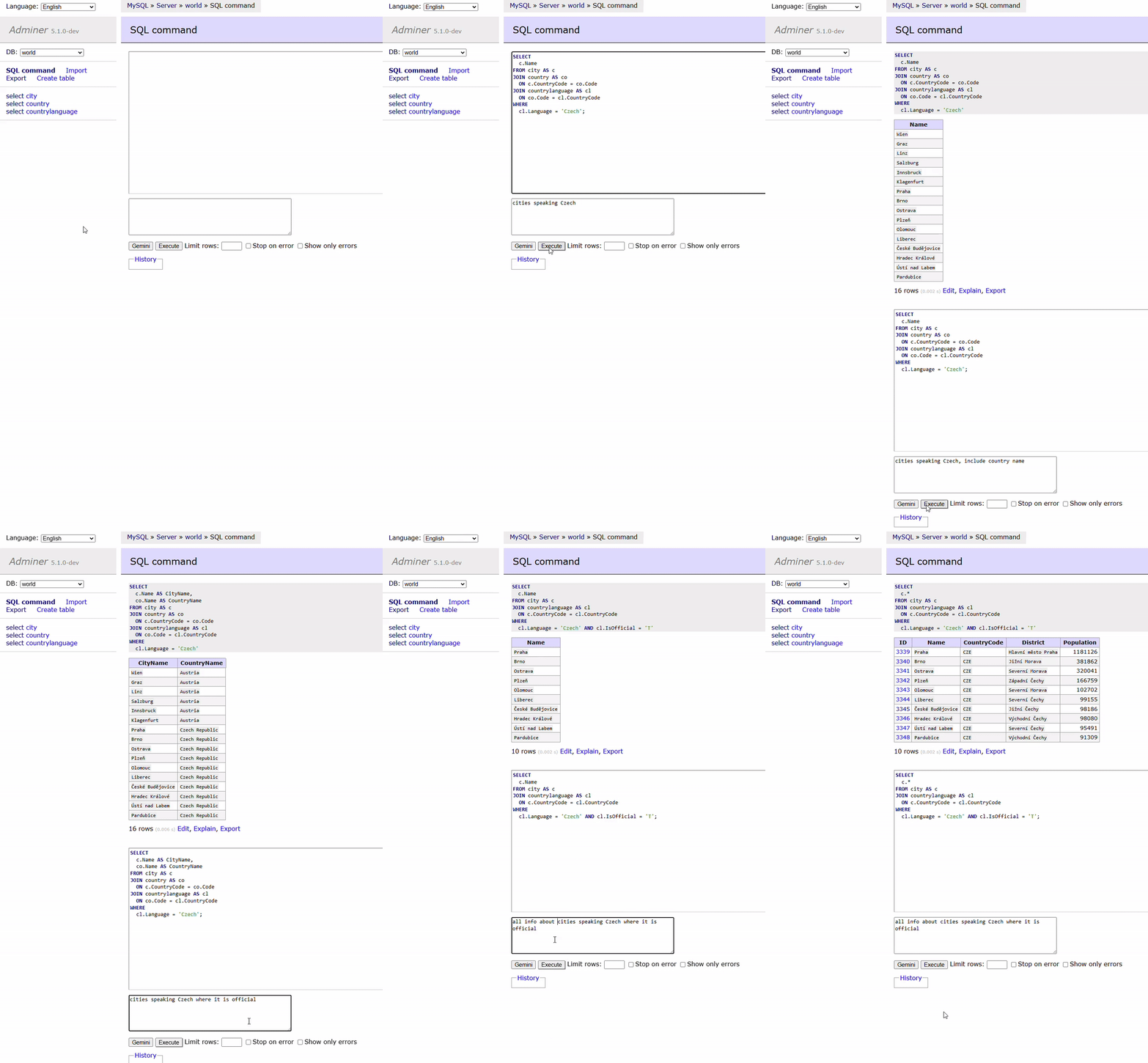
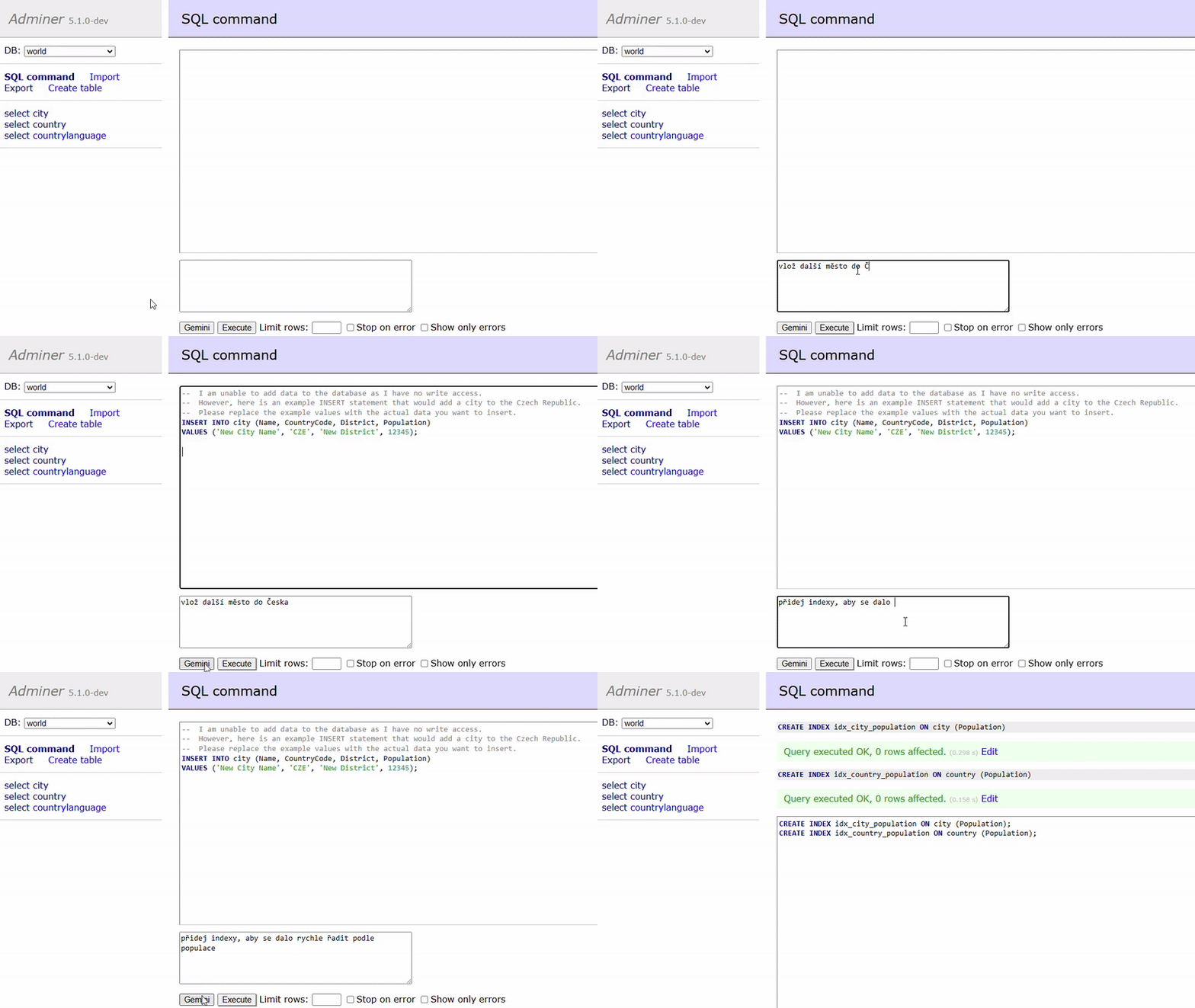
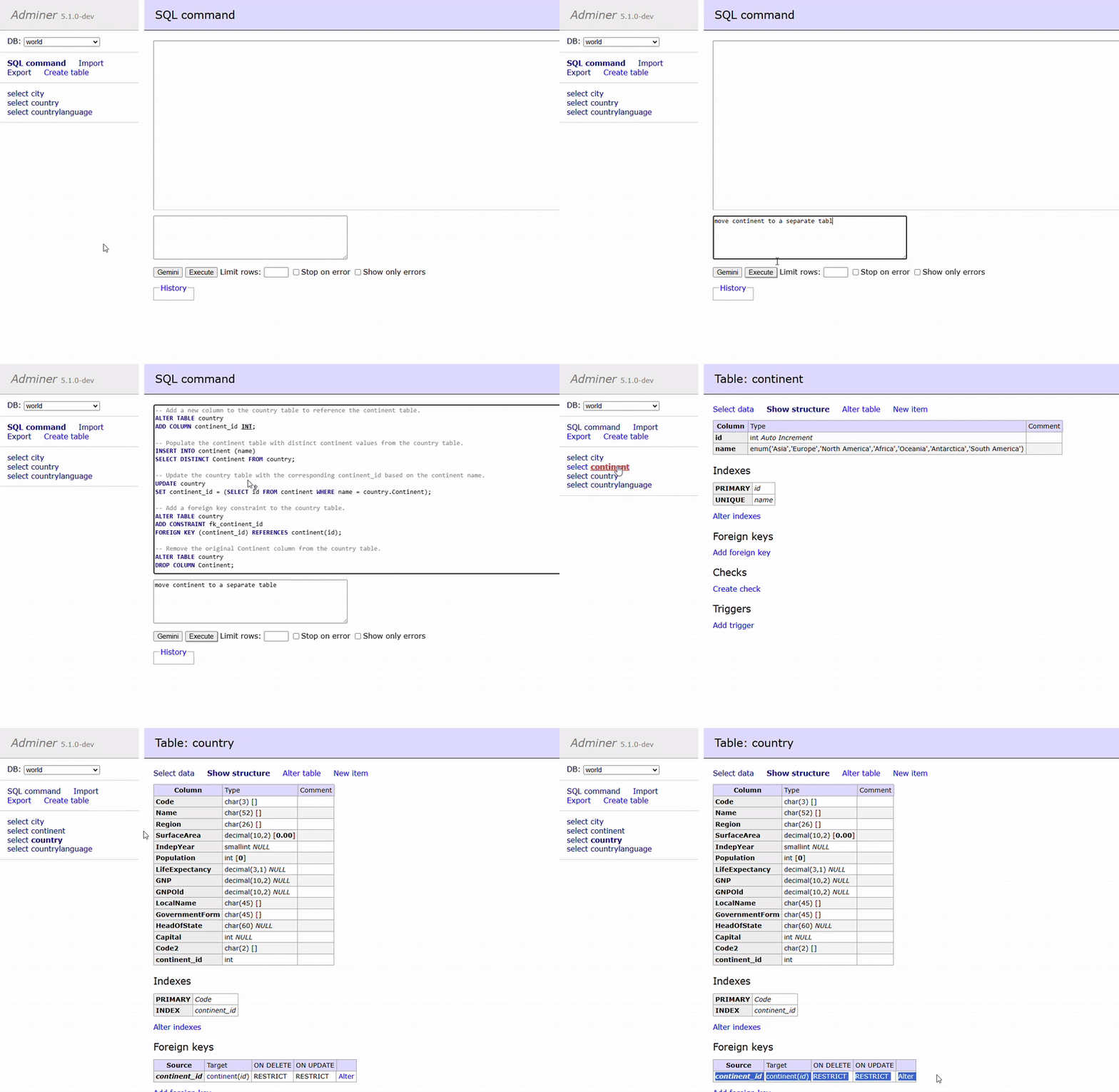
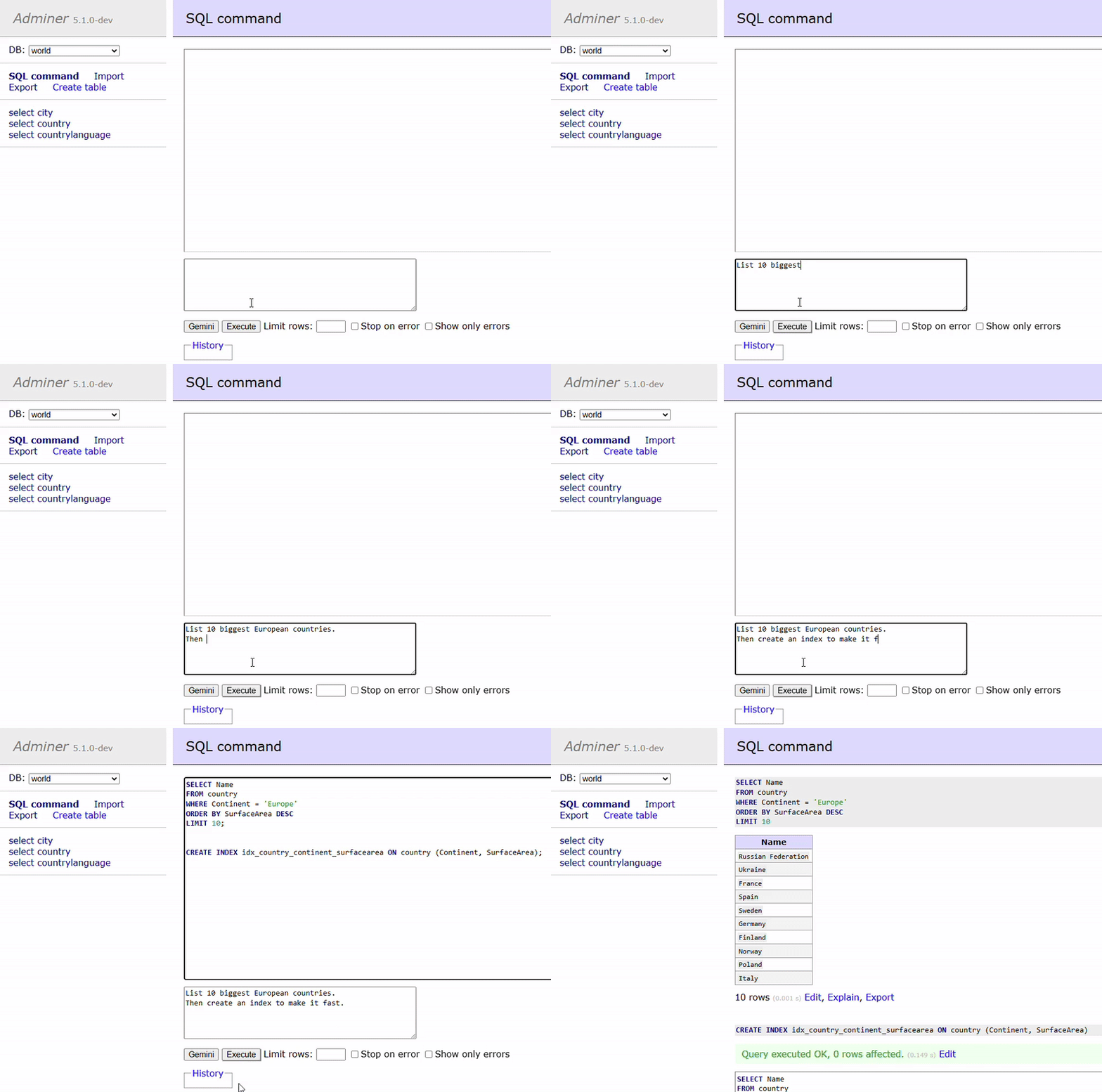
_slugwith slugified value of a previous field (JavaScript) - sql-gemini: AI prompt in SQL command generating the queries with Google Gemini (screenshot, 2, 3, 4)
- sql-log: Log all queries to SQL file
- table-indexes-structure (Matthew Gamble): Expanded table indexes structure output
- table-structure (Matthew Gamble): Expanded table structure output
- tables-filter: Filter names in tables list
- timeout: Specify timeout for running every query
- tinymce: Edit all fields containing
_htmlby HTML editor TinyMCE and display the HTML in select - translation: Translate all table and field comments,
enumandsetvalues from thetranslationtable (automatically inserts new translations) - version-github: Verify new versions from GitHub
- version-noverify: Disable version checker
Driver plugins
- elastic: Driver for Elasticsearch
- mongo: Driver for MongoDB
- firebird: Driver for Firebird
- clickhouse: Driver for ClickHouse
- simpledb: Driver for SimpleDB
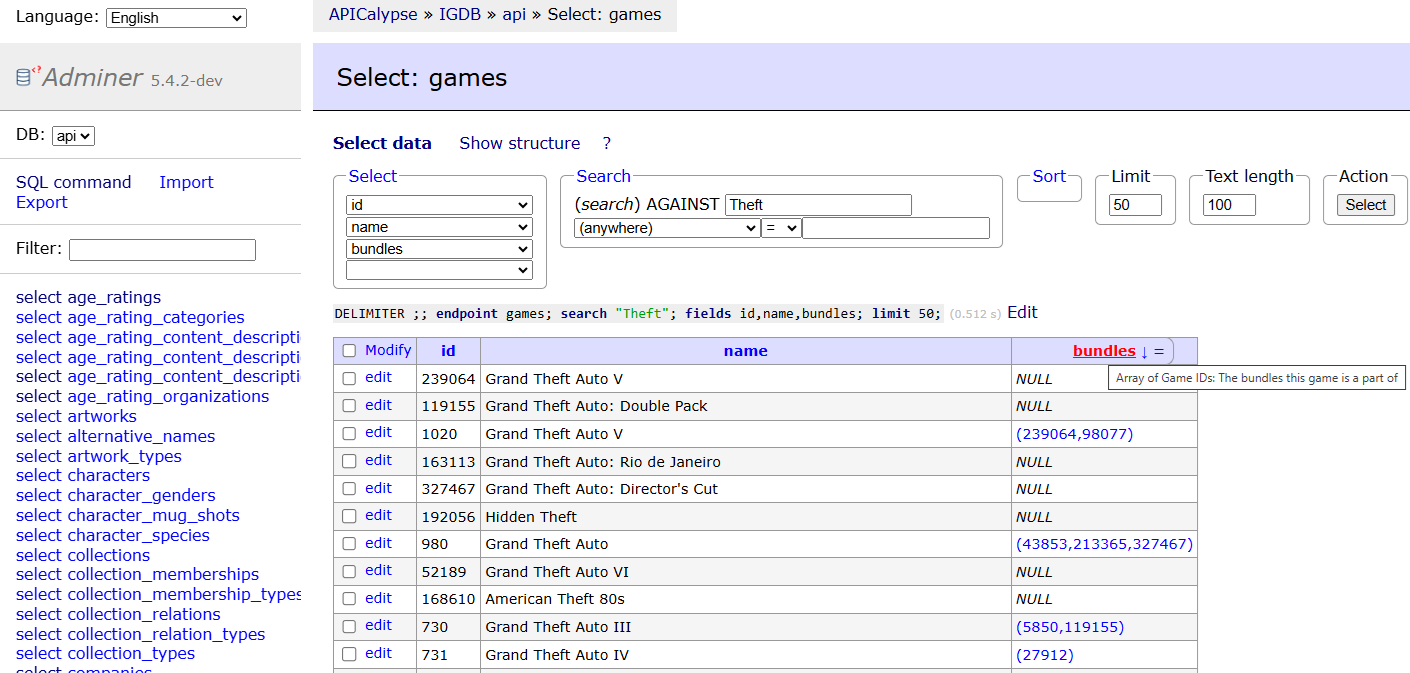
- igdb: Driver for IGDB API (demo, screenshot)
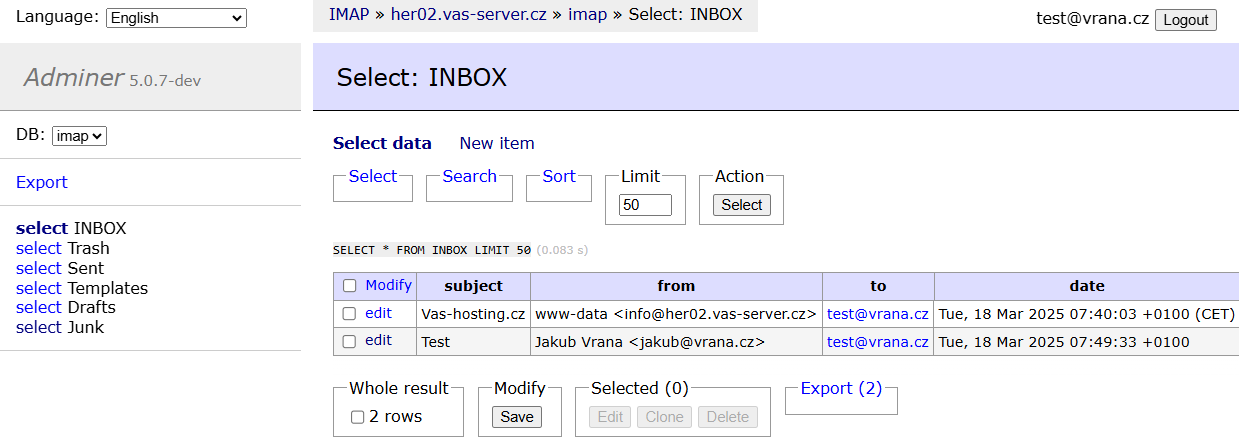
- imap: Driver for IMAP (screenshot)
To use a plugin
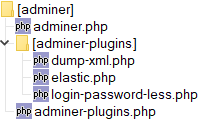 To use a plugin, upload it to
 adminer-plugins/ directory next to adminer.php file. If the plugin needs some configuration or you want to specify order of the plugins, use adminer-plugins.php:
<?php // adminer-plugins.php
return array(
    new AdminerLoginPasswordLess('$2y$07$Czp9G/aLi3AnaUqpvkF05OHO1LMizrAgMLvnaOdvQovHaRv28XDhG'),
    // You can specify all plugins here or just the ones needing configuration.
);
You can upload driver plugins to adminer-plugins/ too.
User contributed plugins
- allowed-prefixes (Martin Macko): Show only tables with user set prefixes (2025-03-18)
- bootstrap-like-design (Natan Felles): User interface inspired by the Bootstrap Framework with Font-Awesome icons. (2025-11-12)
- camera-upload (Marcelo Gennari): Upload images from Adminer to server's disc (needs WebcamJS library) (2025-03-17)
- collations (Pematon): Custom character sets in collation select boxes (2025-03-16)
- colorfields (Prema van Smuuf): Display colors if color codes (HEX, RGB) are present in cells (2016-04-21)
- colors (Filip Procházka): Color ribbon based on server (2016-04-12)
- column-comment (Tomohito Higuchi): Show column comments in table headers (2025-03-16)
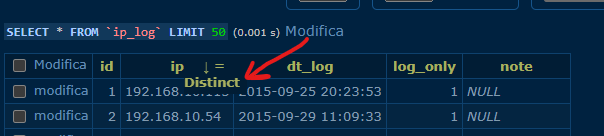
- column-header-button (Andrea Mariani): Add "Distinct" on each column (2025-08-13, screenshot)
-
convention-foreign-keys
(Ivan Nečas):
Links for foreign keys by convention
user_id=>users.id(2011-02-10) - copy (Adil Yildiz): Copy cell content to clipboard using right click (2020-02-17)
- customize-theme-based-on-server (Michael Mokroß): Add a server-specific CSS file to the current theme (2025-03-16)
- db-structure (Emanuele Toscano): Generates an AI-friendly markdown schema for your database or selected tables (2025-07-21)
- disable-tables (Andrea Mariani): Disable tables based on the name (2025-08-13)
- display-foreign-key-name (Bruno Vibert): Display the first CHAR/VARCHAR column of a foreign key (2025-03-19)
- dump-markdown (Federico Thiella): Export table data as markdown (2025-03-27)
- dump-markdown-dict (sc419): Export table structure as markdown (2026-01-09)
- dump-nette (David Grudl): Export as PHP code for Nette (2025-12-28)
- dump-xml-dataset (Michal Brašna): Dump to XML format specifically PHPUnit's XML DataSet structure (2025-03-16)
- export-sql (Rodrigo Laiola Guimarães): Button to export the current SQL command as a downloadable file (2025-11-18)
- faster-tables-filter (Martin Macko): Filter tables menu faster than the official plugin (2025-03-18)
- favorite-query (Andrea Mariani): Save queries as favorites (2025-08-13, screenshot)
- favorites tables (Ladislav Ševcůj): Pin favorite tables in table menu (needs jQuery library) (2016-12-16)
- fk-disable (Andrea Mariani): Disable foreign key checks for selected queries (2025-08-13)
- float-thead (Stano Paška): Floating table headers (needs jQuery and floatThead) (2025-03-16)
- folder-import (Roy-Orbison): Import SQL files from server's disc (2025-03-16)
- foreign-keys (Marek Hučík): Show links to related tables by foreign key (2025-04-01)
- hide-tables (Pavel Kutáč): Hide tables from table menu (2025-03-11)
- hideable-columns (Stephan): Hide columns from tables by Alt+click on column header (2025-12-19)
- highlight-ace (David Grudl): Autocomplete SQL for keywords, tables and columns using Ace Editor (2025-12-28)
- imagefields (Ladislav Gálik): Load images from their URL and show them in the tables (2025-06-12)
- input-uuid-generator (Pavel Kutáč): Adds buttons to cells to create UUIDs (2025-03-11)
- ispconfig (Natan Felles): Authenticate and auto-check host by ISPConfig Remote API (2025-03-26)
- json-preview (Pematon): Display JSON values as table (2025-03-16)
- json-var-dumper (Marc Christenfeldt): Export table data to JSON (needs symfony/var-dumper) (2020-05-18)
- login-external (Roy Orbison): Login from external source without exposing credentials (2025-03-17)
- login-forced-server (MirLach): Force login to specified server (2025-05-28)
- login-form-auto (Paul Borel): Filling and/or auto-submitting the login form (2025-07-26)
- login-form-fill (Pavel Kutáč): Fill login form by set values (2025-03-11)
- login-servers (Pematon): Display list of predefined servers with different drivers in login form (2025-03-16)
- login-servers-enhanced (CrazyMax): Display a list of predefined database servers in login form (2025-04-13)
- login-sqlite (rohusan): SQLite: Show only list of DBs and password in login form (2025-04-22)
- login-without-credentials (David Grudl): Allows login without password from localhost (2025-12-28)
- multi-databases (xuanyan): Independent account configuration for database connections (2026-01-14)
- nette-user-login (Mikuláš Dítě): Nette framework user login (2012-08-22)
- one-click-login (Sérgio Freitas): Display a list of predefined database servers to login with just one click (2018-07-18)
- php-export (Adrian Andreescu): Export table data to PHP arrays (2025-06-29)
- php-serialized-data (Don Wilson): Display serialized PHP values as table in edit (2025-03-17)
- postgres-user-management (BossBele): Manage users in Postgres database (2026-04-28)
- readable-dates (Dora Bulkins): Replaces UNIX timestamps with human-readable dates in your local format (2018-02-06)
- resize (Tiago Gil Marques): Resize table menu (needs jQuery and jQuery cookie libraries) (2020-11-11)
- restore-menu-scroll (Jiří Petruželka): Remembers and restores scollbar position of side menu (2025-03-18)
- save-menu-pos (David Grudl): Save position of the menu in designs with separate menu scrolling (2025-12-28)
- schema-default-to-public (Martin Zubek): Objects not found in current scheme are also searched for in the public scheme (PostgreSQL only) (2025-03-16)
- search-autocomplete (Stephan): Excel-like behaviour with auto-complete in the search-fields (2025-12-19)
- show-table-row (Kazuhiro Ogihara): Show one table row on a single page (2025-03-17)
- simple-menu (Pematon): Displays only the prefered action in table menu (2025-03-16)
- sql-claude (Michal Škoula): AI prompt in SQL command generating the queries with Anthropic Claude (2025-04-25)
- sql-ollama (Guilherme Saldanha): Bring local AI to Adminer: generate SQL queries using Ollama with schema awareness, autocomplete integration, and zero external data sharing (2026-03-01)
- sql-wizard (David Grudl): Generate SQL queries from natural language prompts using ChatGPT (2025-12-28)
- sticky-columns (Stephan): Keep columns and table headers always in sight when scrolling (2025-12-19)
- suggest-tablefields (Andrea Mariani): Suggest fields and table names in sql editor (2025-08-13)
- table-filter (Gábor Zabojszky-Horvath): Filter tables menu, works only with custom themes where table list is floated (needs jQuery library) (2020-05-27)
- tables-collapse (Tiago Gil Marques): Collapse tables (needs jQuery and jQuery cookie libraries) (2020-11-13)
- tables-fuzzy-search (Bruno Duyé): Fuzzy search (filter) in tables list (2017-10-12)
- tables-history (Ale Rimoldi): Show the history of the last selected tables (2014-06-06)
- theme-switcher (Victor Nogueira): Switch themes from browser or command line (2025-03-17)
- tree-view (Petro Kostyuk): Display related rows from different tables in one page (2025-03-16)
- xlsx-dump (Tomohito Higuchi): Export table data to XLSX (needs SheetJS and FileSaver.js libraries) (2025-07-07)

Adminer 5 plugins require using a namespace. Older plugins can be converted by a script.
To create a new plugin
- Create a class containing any methods defined in the
Adminerclass (documentation). - If these methods return a non-
nullvalue then it will be used instead of the original (exceptconfig,dumpFormat,dumpOutput,editRowPrint,editFunctionswhere the return value is appended to the original). - Methods can also overwrite their parameters by accepting them by reference:
f(&$param). - If you would like to publish the plugin on this page then upload it somewhere (e.g. to GitHub Gist) and send the link to: jakub@vrana.cz.